 If you have a swimming pool, nothing is more important than being able to have a clean, crystal clear pool! In order to have this, you must use pool filters in your swimming pool. Essentially, there are three main kinds of swimming filters. They are - Sand, Cartridge and DE. Though all three of these are amazing options to choose from, like most things in life - you will have negatives as well as benefits. If you want to know more about these three types of filters or you want to figure out the best one for your needs, keep reading to find out more.
Sand Filters
These filters are exactly what they sound like; they consist of a large tank filled with sand. The water gets pushed down in through the sand which then filters out any contaminates and bacteria before it ends up in your pool. It’s a really ingenious and yet simple filter. These filters are great because they filter out anything as low as 20 microns. The "bacteria" and contaminates get stuck between the sand and that’s how its filter out. Unfortunately, with sand the particles will block more and more water from going through and eventually you will end up with backwash.
Pros of Sand Pool Filters
- Easy to maintain, use and set up
- Very inexpensive to replace
- Sand lasts up to 7 years
Cons of Sand Filters
- Requires weekly backwashing
- Waste of energy and water through backwashing - you could see a rise in your water bill because of this filter
- While 20 microns is good, it’s not the best by far
- Because this is a system that creates a lot of pressure, it tends to be less energy efficient
Cartridge Filters
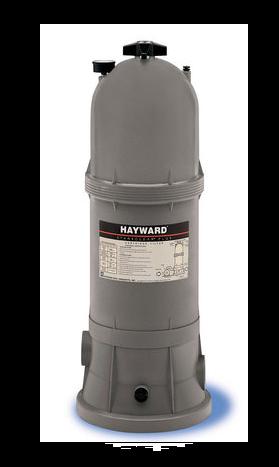
Filters like the cartridge filter, work when they pass water through a fine filter surface. The filter in itself is what catches any contaminants and impurities and stays in the filter until you can clean it. In the meantime, the clean clear water goes into your pool. Again, an ingenious design and yet oh so simple. Cartridges are a common product in most homeowner’s homes that have pools. They filter down to 5 microns which is obviously a lot better than the 20 that sand filters have. It’s really one of if not the most every efficient, readily used and cost efficient products you could use for a swimming pool.
Pros of Cartridge Filters
- Absolutely no backwashing needed
- Since these filter at lower speeds than the sand filter, its energy efficient
- Traps particles that are around 5-10 microns small
- Saves water
- The filter cartridges are not only easy to find in most any pool store, but they are pretty inexpensive as well
Cons of Cartridge Filters
- Unlike the sand filters above, cartridge filters do take more time to maintain
- Cartridges need to usually be replaced every 4 years
DE Filter
Out of the above two filters, this filter is by far the most technologically advanced so one would assume already that it’s also the most expensive - and you would be right. However, it has a right to be the most expensive because of the efficiency it brings to the table when it comes to pool filters. Where sand filters can sift 20 microns or more and cartridge filters can sift 5-10 microns, diatomaceous earth can sift an even smaller amount - which means a really clean and non-contaminant pool. The diatomaceous earth filter can sift 1-3 microns. That alone is pretty amazing. DE filters use grids as a way of cleaning the pool; in this case they use diatomaceous earth powder. This powder is what you would expect to see when you hear the word diatomaceous earth; it’s usually pale in color, and is a sandy texture but ultra-fine in comparison and has no granules.
Pros of DE Filters:
- The diatomaceous earth filters can simply be added to your pools skimmer
- The diatomaceous earth filter can filter 5-10 microns
Cons of DE Filters
- Diatomaceous earth is definitely a more costly option
- More time to maintain the filter
- When you have diatomaceous earth it’s carcinogenic in its powdered form - this could be a red flag for you and something you want to stay away from, or you might not really care either way!
